
Center Barnstead, New Hampshire
Small Engine Repair in Barnstead, NH
Snowblower won't start? Riding mower running rough? Chainsaw that's been sitting too long? Combustion Motorworks LLC provides dependable small engine repair in Barnstead, NH for the outdoor power equipment that NH homeowners and property owners rely on year-round. Serving Barnstead, Gilmanton, Pittsfield, Alton, and the entire Lakes Region.
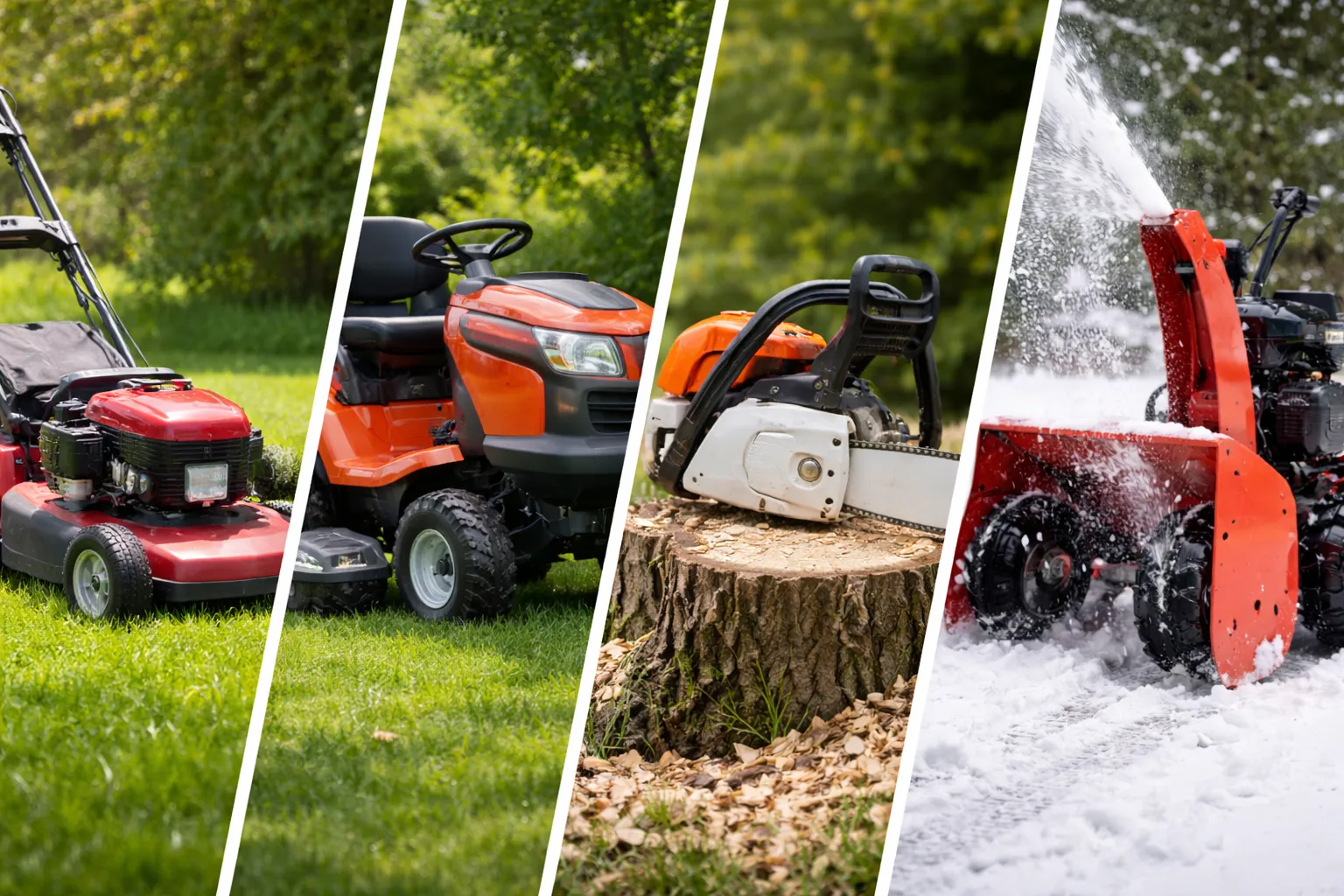
Equipment We Service
We focus on outdoor power equipment with engines that are worth repairing — the kind of machines that represent a real investment and are built to last with proper maintenance.
- Snowblowers — single and two-stage, all major brands
- Push mowers and self-propelled mowers
- Riding mowers and zero-turn mowers
- Yard tractors and garden tractors
- Chainsaws — gas-powered, all sizes
- Log splitters and other outdoor power equipment
- Generators — starting, running, and output issues
- Pressure washers — gas-powered engine service
Not sure if your equipment is a good candidate for repair? Give us a call at (603) 269-4770 and describe what it's doing — we'll give you an honest answer before you haul it in.
Common Small Engine Problems We Fix
The majority of small engine failures — especially after storage — come down to a handful of recurring issues. Here's what we see most often and what's typically involved in the repair:
Won't start after sitting — By far the most common complaint. Modern gasoline contains ethanol, which attracts moisture and breaks down much faster than older fuel formulations. Fuel left in a carburetor over a winter or a summer season turns into a varnish that clogs the tiny jets and passages the carburetor needs to function. The fix is usually a thorough carburetor cleaning or rebuild, fresh fuel, and a new spark plug. This is a straightforward repair that gets most equipment running again.
Runs rough or surges — An engine that starts but hunts, surges, or runs unevenly is almost always a carburetor issue — either a partially clogged main jet or a worn needle and seat allowing inconsistent fuel delivery. A dirty air filter or fouled spark plug can contribute as well. A carburetor cleaning or rebuild combined with fresh consumables usually resolves this completely.
Hard starting — pulls but won't fire — Can be a weak spark, a fuel delivery issue, low compression, or a combination. We test each system to identify the actual cause rather than replacing parts at random.
Runs but lacks power — Loss of power under load is often a carburetor tuning issue, a partially blocked fuel line or filter, a dirty air filter, or early signs of compression loss. Worth diagnosing before assuming the worst.
Mechanical issues — Snowblower auger problems, drive system issues on riding mowers, recoil starter assembly failures, and other mechanical problems beyond the engine itself are also things we work on.
The Ethanol Problem — Why NH Equipment Has More Fuel Issues Than It Used To
If it seems like small engines are harder to keep running than they used to be, you're not imagining it. The widespread use of ethanol-blended gasoline — E10 and increasingly E15 — has made fuel system problems significantly more common in small engines, and understanding why can help you avoid unnecessary repair bills.
Ethanol is hygroscopic — it actively attracts and absorbs moisture from the air. In a car that's driven regularly, this isn't a major issue because the fuel turns over quickly. In a snowblower that sits from April to October, or a mower that sits all winter, the ethanol in the fuel absorbs moisture, the gasoline oxidizes, and the whole mixture degrades into a varnish-like substance that coats carburetor passages and fuel system components.
The best prevention is using fuel stabilizer any time equipment will sit for more than 30 days, or better yet, running the carburetor dry at the end of each season by letting the engine run until it stalls from fuel starvation. Fresh fuel at the start of each season — not gas that's been sitting in a can since last year — also makes a significant difference.
If your equipment is already gummed up from old fuel, we can clean or rebuild the carburetor and get it running correctly again. It's a common repair and usually very cost-effective.
Seasonal Service — The Right Time to Bring Equipment In
Timing matters with small engine service. Bringing equipment in at the right time means faster turnaround, better availability of parts, and your machines ready when you actually need them — not sitting in the shop on the first cold morning of the season.
Snowblowers: Late summer or early fall is ideal — August through September. This is well before the pre-season rush that hits in October and November. We can take our time with the service, order any needed parts without urgency, and have your snowblower ready before the first NH snowfall. Waiting until late October means longer turnaround times as everyone else has the same idea at the same time.
Lawn mowers and riding mowers: Late fall or winter is the best window — after your last mow of the season and before spring demand picks up in March and April. End-of-season service also means you're not leaving fuel in the carburetor all winter, which is the primary cause of hard starting the following spring. A mower serviced in November is ready to go in April without surprises.
Chainsaws and other equipment: Any time is fine for these — demand is more spread out. If your chainsaw is giving you trouble, don't wait until you have a downed tree in the yard to find out if it runs.
Is It Worth Repairing or Should You Replace?
This is a question we get often, and we always give an honest answer. The short version: for most quality snowblowers and riding mowers, repair is almost always the better value.
A two-stage snowblower that cost $800–$1,500 new and needs a carburetor rebuild and a new ignition coil is worth repairing — the repair will cost a fraction of replacement and the machine will run like new. The same logic applies to a quality riding mower or yard tractor that needs fuel system work or a mechanical repair.
Where replacement starts to make more sense is when an engine has suffered significant mechanical damage — low compression from a scored cylinder, a bent crankshaft from a blade strike on a mower, or a seized engine from running without oil. In those cases the repair cost often approaches or exceeds replacement cost, and we'll tell you that plainly rather than take your money on a marginal repair.
When you bring equipment in, we'll assess the condition, tell you what's needed, and give you a straight answer on whether the repair makes financial sense. No pressure either way.
Frequently Asked Questions
My snowblower won't start after sitting all summer — can you fix it?
Yes, this is one of the most common things we see. Ethanol-blended fuel left in the carburetor over the summer breaks down and leaves varnish deposits that clog the jets and passages. A carburetor cleaning or rebuild, fresh fuel, and a new spark plug gets most snowblowers running again. Call us at (603) 269-4770 to schedule a drop-off.
My lawn mower starts but runs rough or surges — what causes that?
Almost always a carburetor issue — a partially clogged jet or worn needle and seat causing inconsistent fuel delivery. A carburetor cleaning or rebuild usually resolves it completely. A dirty air filter or old spark plug can contribute and are worth replacing at the same time.
When is the best time to bring in my snowblower?
Late summer or early fall — August or September. Well before the October/November rush. We can take our time, source any needed parts, and have it ready before the first snowfall.
When should I bring in my lawn mower?
Late fall or winter after the season ends. End-of-season service prevents fuel from sitting in the carburetor all winter — the leading cause of hard starting the following spring. A mower serviced in November is ready to go in April.
Is it worth repairing my snowblower or should I buy a new one?
For most quality snowblowers, repair is almost always the better value. A carburetor rebuild or ignition repair costs a fraction of a new machine. We'll give you an honest assessment — if a repair doesn't make sense financially for the equipment, we'll tell you.
Do you repair chainsaws?
Yes. Carburetor cleaning and rebuild, fuel system service, ignition testing, starter rope and recoil assembly repair, and general tune-up work. Chainsaws are heavily affected by ethanol fuel degradation and storage — most issues we see are fuel system related.
Do you work on generators?
Yes. Starting issues, running problems, and general tune-up service for gas-powered generators. Same fuel system and ignition issues apply — generators that sit for extended periods are prone to carburetor problems just like other small engines.
Serving Barnstead and the Lakes Region
Combustion Motorworks is located at 27 Depot St, Building G in Center Barnstead — convenient for customers throughout central New Hampshire and the Lakes Region.
We serve customers from Barnstead, Gilmanton, Pittsfield, Alton, Belmont, Laconia, Northwood, Epsom, Strafford, and surrounding towns. If you're looking for a local shop that works on small engines and gives you straight answers about what your equipment needs, give us a call.
We also provide full auto repair services including brake repair, oil changes, vehicle diagnostics, engine and cooling service, motorcycle service, and vintage snowmobile restoration.
Visit Combustion Motorworks in Center Barnstead, NH
Located at 27 Depot St Building G in Center Barnstead, NH. Serving Barnstead, Gilmanton, Pittsfield, Alton, Laconia, and the greater Lakes Region.