Noise Evaluation
We consider when the noise occurs, how it changes with speed, whether cornering affects it, and whether the sound is linked to road surface or braking.
Center Barnstead, New Hampshire
Hearing a humming, growling, or roaring noise that changes with road speed? Feeling vibration, looseness, or a change in how the vehicle handles? Combustion Motorworks LLC provides wheel bearing diagnosis, wheel hub replacement, and front-end troubleshooting in Center Barnstead, NH.
Wheel-bearing symptoms can overlap with tire noise, wheel problems, suspension wear, brake concerns, and other front-end issues, so we inspect the related systems before recommending replacement.
Serving Barnstead, Gilmanton, Pittsfield, Alton, Belmont, Laconia, Strafford, and communities throughout the Lakes Region.
Wheel bearings allow the wheels and hub assemblies to rotate smoothly while supporting vehicle load. As a bearing or hub wears, it may develop noise, looseness, vibration, or other front-end symptoms.
If your concern is broader than the wheel bearing itself, see our automotive diagnostic services .
Wheel-bearing symptoms can develop gradually, and the sound or vibration may be mistaken for tires, brakes, or suspension problems.
Humming, growling, or roaring noise — A bearing may produce a road-speed-related noise that becomes louder as vehicle speed increases.
Noise that changes while turning — In some cases, cornering changes the load on the bearing and may make the noise more or less noticeable. This can be a useful diagnostic clue, but it is not proof by itself of which bearing is worn.
Grinding or rough mechanical noise — Grinding can indicate more advanced bearing wear or another mechanical condition and should be inspected promptly.
Wheel play or looseness — Excessive movement at the wheel or hub can involve the bearing, suspension, steering, or other components.
Vibration or unstable handling — Bearing or hub wear can contribute to vibration or looseness, but tires, wheels, suspension, steering, and brake components can create similar symptoms.
ABS or traction-control warning — On some vehicles, hub assemblies contain or interact closely with wheel-speed sensors and tone rings. A hub, bearing, sensor, wiring, or related fault may affect ABS or stability-system operation.
Humming or roaring from the front or rear of a vehicle does not automatically mean a wheel bearing has failed.
Uneven tire wear, cupping, aggressive tread patterns, damaged tires, or other tire conditions can create noise that sounds remarkably similar to bearing noise.
Tire noise may also change with road surface, while bearing noise often changes more consistently with vehicle speed or cornering load. In the real world, though, those patterns can overlap.
That is why we evaluate the tires, wheels, hubs, bearings, suspension, and related front-end components before recommending a repair.
If the tires or wheels appear to be the source, see our tire and wheel services .
Front-end and road-speed noises can be deceptive. A bearing can be noisy without obvious looseness, and a tire can sound like a bearing even when the hub is perfectly serviceable.
We consider when the noise occurs, how it changes with speed, whether cornering affects it, and whether the sound is linked to road surface or braking.
Hub and bearing condition are evaluated for noise, roughness, looseness, or other evidence of wear.
Tire wear, cupping, damage, wheel condition, and related issues are considered because they can closely mimic bearing symptoms.
Ball joints, tie rods, control arms, bushings, and other front-end components may create looseness, vibration, or noise that overlaps with bearing complaints.
Brake components can also create grinding, vibration, scraping, or noise that may initially be mistaken for a hub or bearing problem.
If warning lights or electronic braking symptoms are present, we can evaluate related wheel-speed sensor, wiring, hub, and ABS-system information.
Depending on vehicle design, the wheel bearing may be serviced separately or it may be part of an integrated hub assembly.
Many modern vehicles use a complete hub unit that may include the bearing, wheel flange, and components associated with the ABS wheel-speed sensing system.
When diagnosis confirms failure, the correct repair depends on the design of that vehicle. In some cases the bearing itself is replaced; in others, the complete hub assembly is serviced.
We identify the actual component and vehicle configuration before recommending the repair.
On many vehicles, wheel-speed information used by the ABS and stability systems is associated closely with the hub or bearing assembly.
Depending on vehicle design, the sensor may be integrated into the hub, mounted near the bearing, or read a tone ring that is part of the hub or axle assembly.
A warning light can therefore involve:
The warning code helps identify where testing should begin, but the underlying failure should be confirmed before parts are replaced.
For brake and ABS-related concerns, visit our brake repair and ABS diagnostics page .
Severity matters.
A bearing that has just begun making noise may behave very differently from one that has developed significant looseness, grinding, overheating, or instability.
Because bearing wear can progress, a suspected bearing problem should be inspected rather than ignored.
If you notice severe grinding, obvious wheel looseness, unstable handling, rapidly worsening noise, or another symptom that makes the vehicle feel unsafe, avoid unnecessary driving until the problem is evaluated.
New Hampshire roads can be hard on tires, wheels, hubs, bearings, steering, and suspension components.
A major pothole or frost-heave impact can create or worsen:
If a new humming noise, vibration, clunk, steering change, or tire problem appears after a hard impact, a complete front-end inspection can help identify which component was affected.
For broader front-end service, see our suspension and steering repair page .
Grinding, vibration, scraping, or wheel-area noise can sometimes involve brake components rather than the wheel bearing.
If a vibration or noise changes primarily while braking, the brake system should be considered as part of the diagnosis.
Likewise, excessive hub or bearing play can sometimes affect wheel-speed information or create symptoms that are noticed during braking.
Learn more about our brake repair services .
Loose steering, front-end clunks, wandering, vibration, or uneven tire wear may point toward steering or suspension components rather than the wheel bearing itself.
Ball joints, tie rods, control arms, bushings, shocks, struts, wheels, tires, and bearings all influence how the front end feels.
That is why the complete front-end system should be considered when the symptom is not clearly isolated.
Visit our suspension and steering repair page for more information.
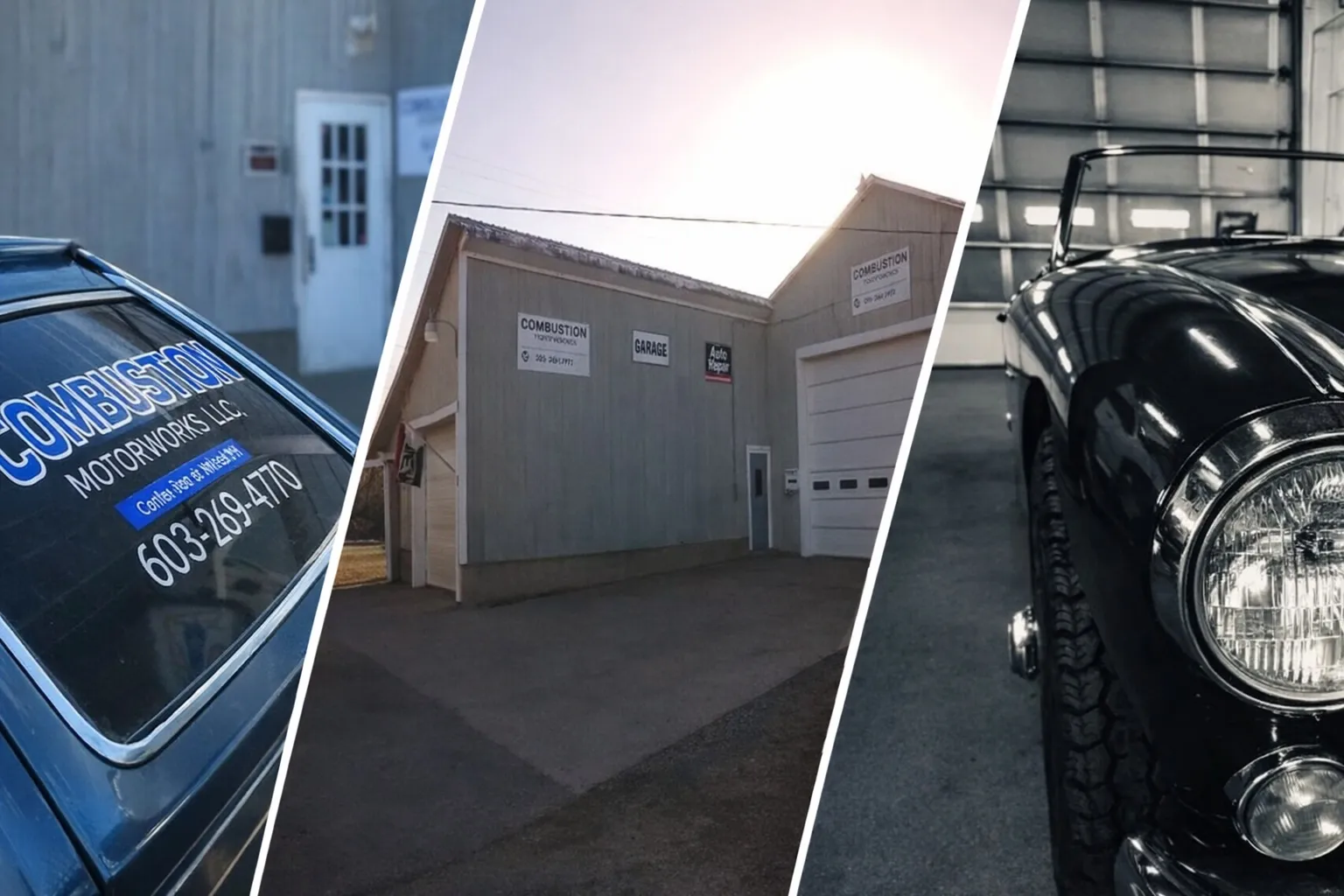
Combustion Motorworks LLC is a locally owned, full-service auto repair shop at 27 Depot St Building G in Center Barnstead, NH.
Our ASE Certified Master Technician provides wheel bearing and hub repair along with suspension, steering, brakes, tires, diagnostics, electrical service, engine repair, and general vehicle maintenance.
Because those related services are available in one shop, we can determine whether a humming, vibration, clunk, or handling problem is truly coming from the bearing or another system.
For general automotive repair, visit our mechanic in Barnstead, NH page or return to Combustion Motorworks auto repair .
A worn bearing may create humming, growling, roaring, or grinding that changes with vehicle speed or cornering load. Tire noise can sound very similar, so diagnosis is important.
Yes. Bearing or hub wear can sometimes contribute to vibration, looseness, or unstable handling, but tires, wheels, suspension, brakes, and steering components can produce similar symptoms.
Yes. Uneven or cupped tire wear can create humming or roaring noise that closely resembles bearing noise.
On some vehicles, yes. The hub or bearing assembly may incorporate or interact with wheel-speed sensing components used by ABS and stability systems.
It depends on the severity, but suspected bearing problems should be inspected promptly. Significant looseness, grinding, unstable handling, or rapidly worsening symptoms deserve immediate attention.
A hard impact can affect bearings, hubs, wheels, tires, suspension, or alignment. New symptoms after an impact should be inspected.
Yes. Many vehicles use integrated hub and bearing assemblies. We replace the appropriate bearing or hub assembly when diagnosis confirms failure.
Wheel-bearing symptoms often overlap with other front-end systems. Combustion Motorworks also provides:
Combustion Motorworks provides wheel bearing diagnosis, hub replacement, front-end troubleshooting, suspension repair, and related automotive service throughout central New Hampshire.
We regularly serve drivers from Barnstead, Center Barnstead, Strafford, Pittsfield, Gilmanton, Alton, Belmont, Laconia, Gilford, Northwood, and surrounding Lakes Region communities.
You can also visit our pages for auto repair near Strafford, auto repair near Pittsfield, auto repair near Gilmanton, auto repair near Alton, and Lakes Region auto repair.
Sharing your experience on Google helps other local drivers find Combustion Motorworks.
Humming, growling, vibration, or wheel-area noise? Let us diagnose the source.
Call (603) 269-4770Located at 27 Depot St Building G in Center Barnstead, NH. Serving Barnstead, Gilmanton, Pittsfield, Alton, Strafford, Belmont, Laconia, and the greater Lakes Region.