
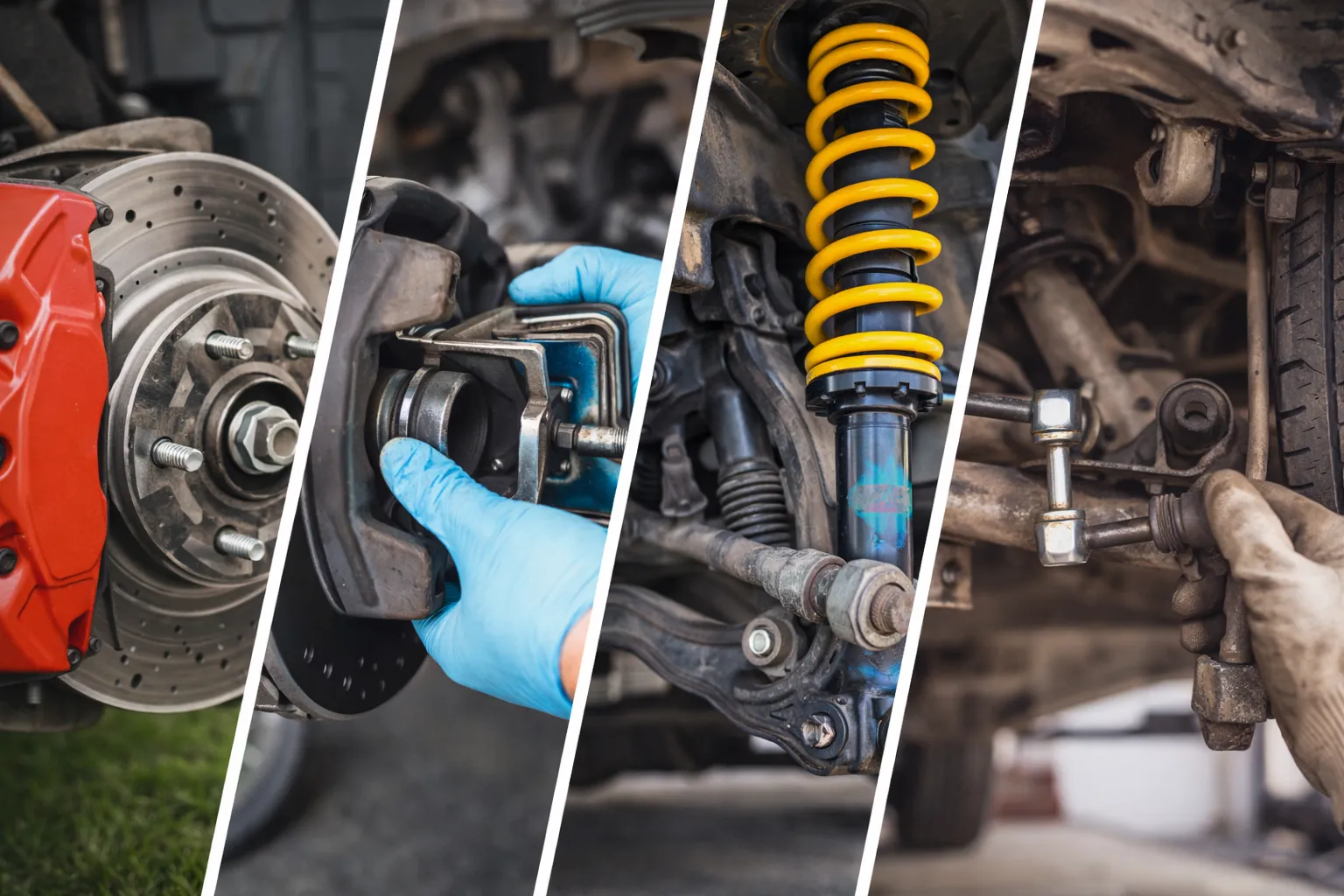
How Winter Roads Affect Brakes in Barnstead, NH
New Hampshire winters expose vehicles to road salt, moisture, slush, freezing temperatures, potholes, and frost heaves for months at a time. Those conditions can accelerate corrosion and wear on brakes, suspension, steering, wheel bearings, tires, and other components.
This guide explains what winter conditions can do to a vehicle, which symptoms are worth paying attention to in spring, and when a brake or suspension inspection makes sense.
If your vehicle is already showing brake symptoms, visit our brake repair and brake service page .
Why New Hampshire Winters Are Hard on Brake Systems
Brake components live close to the road surface, where they are exposed directly to water, salt spray, slush, dirt, sand, and changing temperatures.
Unlike many components protected inside the engine compartment, rotors, calipers, brake hardware, hoses, lines, and parking-brake components experience repeated exposure throughout the winter.
The effects are usually gradual rather than immediate. Corrosion builds, hardware becomes less free-moving, rubber and metal components age, and small problems may not become noticeable until later in the season.
Road Salt and Brake Corrosion
Road salt is one of the most significant winter factors affecting vehicles in New Hampshire because salt and moisture together accelerate corrosion.
Brake rotors can develop surface corrosion when a vehicle sits after being driven in wet or salty conditions. Light surface rust is common and often clears through normal braking, while heavier corrosion, pitting, scaling, or uneven surfaces can affect noise and braking quality.
Caliper slide mechanisms and brake hardware can also be affected by corrosion. If components no longer move freely, brake pads may wear unevenly, drag against the rotor, or generate excess heat.
Brake lines and related hydraulic components deserve attention as vehicles age. Exposure to road salt can contribute to external corrosion on metal brake lines and fittings, particularly on older vehicles.
Parking brake components may also be exposed to winter moisture and corrosion, especially on vehicles where cables, levers, or hardware are mounted underneath the vehicle.
Is Surface Rust on Brake Rotors Normal?
Light surface rust is common and does not automatically mean a rotor needs replacement.
Iron brake rotors can develop a thin layer of surface corrosion quickly when exposed to moisture. That light rust often clears after several normal brake applications.
The situation is different when corrosion becomes deep, uneven, heavily pitted, scaled, or persistent. A rough braking surface can contribute to brake noise, uneven friction, vibration, and accelerated pad wear.
Rotor thickness and overall condition should be evaluated rather than judging the part only by whether rust is visible.
How Potholes and Frost Heaves Affect the Vehicle
Frost heaves and potholes do not normally damage brake pads simply because the vehicle hits a bump, but the impacts can affect components that influence how the vehicle behaves during braking.
A significant pothole impact can damage or accelerate wear in:
- Tires and wheels
- Wheel bearings and hubs
- Ball joints
- Tie rod ends
- Control arms and bushings
- Struts and shocks
- Strut mounts
- Alignment angles
Problems in those systems can produce vibration, pulling, steering changes, clunking, uneven tire wear, or instability that may become especially noticeable while braking.
If you notice those symptoms, the answer may not be a brake repair at all. Our related services include suspension and steering repair and wheel bearing diagnosis and repair .
Warning Signs to Watch for After Winter
Pay attention to changes in how the vehicle sounds, stops, steers, and rides. Developing problems are often easier to identify when you notice a change from the vehicle's normal behavior.
- Persistent squealing or squeaking — possible brake-pad wear, corrosion, friction-material characteristics, or another brake condition
- Grinding — possible severe friction-material wear or another mechanical problem
- Pedal pulsation or vibration — possible rotor thickness variation, friction deposits, corrosion, runout, wheel issues, or suspension conditions
- Steering wheel vibration while braking — can involve brake components, wheels, tires, steering, or suspension
- Pulling to one side — may involve uneven braking force, tires, steering, alignment, or suspension
- Soft or unusually low brake pedal — may indicate a hydraulic-system or brake-fluid concern
- Clunking or rattling over bumps — often associated with suspension or steering components rather than the brakes themselves
- Uneven tire wear — can indicate alignment, tire, or suspension problems
- Longer stopping distance — can involve brakes, tires, road conditions, hydraulic issues, or other mechanical concerns
If brake-pad wear is your main concern, see our article on signs your brake pads may be worn .
Why a Post-Winter Inspection Can Be Useful
There is no rule that every vehicle needs the same inspection schedule, but a post-winter check can make sense when a vehicle has seen heavy road salt, high mileage, rough roads, towing, or developing symptoms.
Early inspection can identify components that are worn, corroded, or beginning to stick before they become more expensive or affect vehicle performance.
Examples include a caliper slide that is beginning to bind, brake hardware that is heavily corroded, a wheel bearing developing play, a suspension joint becoming loose, or a brake line showing significant external corrosion.
The goal is not to replace parts simply because winter ended. It is to identify developing problems while there are still practical repair options.
Brake Problems Can Be Related to Suspension or Wheel Components
One reason winter complaints can be confusing is that brake, steering, suspension, wheel, and tire symptoms sometimes overlap.
For example, vibration while braking may involve the brake rotors, but it can also be influenced by wheel, tire, bearing, or suspension conditions. Pulling during braking may involve uneven brake force, but steering, alignment, and tire problems can also contribute.
Because Combustion Motorworks is a full-service repair shop, we can evaluate the systems together rather than treating every braking symptom as an isolated brake problem.
Related services include brake repair, suspension repair, wheel bearing repair, and tire and wheel service.
Brake and Suspension Service in Barnstead, NH
Combustion Motorworks LLC provides brake, suspension, steering, wheel bearing, and general automotive repair in Center Barnstead, NH.
If your vehicle developed brake noise, vibration, pulling, clunking, or steering changes over the winter, we can inspect the related systems and determine where the problem is coming from.
We serve customers from Barnstead, Pittsfield, Gilmanton, Alton, Belmont, Laconia, and surrounding Lakes Region communities.
For brake service details, visit our brake repair in Barnstead, NH page or call (603) 269-4770.
Frequently Asked Questions
How do winter roads affect brakes in Barnstead?
Road salt, moisture, slush, and repeated wet conditions can accelerate corrosion on rotors, calipers, brake hardware, brake lines, and other exposed components. Winter driving may also make existing wear more noticeable.
How do I know if my brakes need service after winter?
Persistent brake noise, grinding, vibration, pulling, changes in pedal feel, visible heavy corrosion, increased stopping distance, or a warning light are all good reasons to schedule an inspection.
Is brake pedal pulsation always caused by warped rotors?
No. Pulsation can result from rotor thickness variation, uneven friction deposits, runout, corrosion, worn brake components, wheel issues, or suspension conditions.
Should I get my brakes inspected every spring?
Not every vehicle requires the same schedule, but a post-winter inspection can be useful if the vehicle sees heavy salt exposure, rough roads, towing, high mileage, or any new symptoms.
Is surface rust on brake rotors normal?
Light surface corrosion after wet or snowy conditions is common and may clear with normal braking. Heavy rust, pitting, scaling, persistent noise, or a rough rotor surface should be inspected.
Can potholes damage suspension and steering?
Yes. Significant impacts can affect tires, wheels, alignment, wheel bearings, ball joints, tie rods, struts, shocks, and other suspension or steering components.